The Van Bergen dynasty originally flourished in Northern Germany’s shipping industry, where Heero Andries van Bergen, born in 1738, established himself as a master craftsman manufacturing wooden ship parts in Norden, East Frisia.
When his son, Andries Heeres van Bergen, was just 16 years old in 1784, he crafted an extraordinarily detailed miniature warship complete with sails, rigging, and cannons. This impressive model was displayed on an honorary arch during the King of Hanover’s visit to Leer, attracting such attention that His Majesty personally presented the young craftsman with a sum of money to encourage his exceptional talent.
This early demonstration of precision engineering would later prove invaluable when the family transitioned to bell founding.
(Nieuw Nederlandsch Biografisch Woordenboek 9).

The year 1795 marked the birth of the Van Bergen bell founding dynasty when Andries Heeres I established the family’s first workshop in Midwolda, Netherlands. Born in Oldersum, East Frisia in 1768, Andries had learned his father’s trade as a mast, block, and pump maker before emigrating and purchasing a carpentry workshop in 1790.
When Midwolda’s church bell cracked in 1795, Andries boldly offered to recast it despite having no formal training, having studied the techniques of German masters Claude Fremy and Mammeus Fremy. His successful recasting of both a 240 kg bell and a heavier 2,000 kg bell immediately generated new orders from Termunten, Oostwold, and German communities, establishing the Van Bergen name in a craft that would span nearly two centuries.

The year 1847 represented the culmination of Andries Heeres I’s remarkable career as the 78-year-old patriarch achieved an extraordinary feat: casting 148 bells in his final year. Having gradually stepped back from active work around 1830, Andries had partnered with Mammeus Fremy from 1807 to 1829 and later worked occasionally with his son Udo Andries while operating a grocery store and tavern.
His death in 1847 closed a pioneering chapter, but the infrastructure, techniques, and reputation he established provided the essential foundation for future generations. The modest Midwolda workshop had produced hundreds of bells throughout Reformed churches across the Netherlands and Germany, making Van Bergen synonymous with Dutch bell founding craftsmanship.

The establishment of the Sint Paulinus foundry in Heiligerlee in 1862 transformed the Van Bergen enterprise into a modern industrial operation. Andries Heero II, having outgrown the cramped Midwolda workshop, purchased property for 2,425 guilders and personally designed a factory with a large casting pit capable of producing multiple bells simultaneously. Construction commenced May 7, 1862, achieving remarkable speed—roofed by May 31 and largely complete by July 24 for 2,940 guilders.
The foundry’s reputation grew rapidly through exhibitions at world fairs in Vienna, London, Philadelphia, Paris, Amsterdam, and Antwerp, where Van Bergen bells consistently won gold and silver medals, establishing Heiligerlee’s international prominence.

In 1893, brothers Andries Heero III and Udo Jurrien van Bergen officially took over their father’s company, renaming it A.H. and U.J. van Bergen. The enterprise had expanded beyond bell founding to include a fire engine factory, material storage facilities, and two brick factories.
Unlike their father who traveled with horse and wagon, the brothers practiced their craft in well-equipped facilities, gradually modernizing operations while maintaining traditional artisan approaches. In 1904, the brothers separated their holdings—Andries Heero III continued the bell foundry while Udo Jurrien took the brick factory, marking a new era of technical sophistication that distinguished Van Bergen from competitors.

Under Andries Heero III’s leadership, Van Bergen received one of the Netherlands’ most prestigious honors: casting two bass carillon bells for Utrecht’s Dom Tower to complement the legendary 17th-century Hemony carillon. The commission generated considerable excitement and national attention, placing Van Bergen among the elite bell founders of Europe.
While the bells revealed opportunities for advancement in tuning techniques—as Dutch founders were still mastering the art of post-casting refinement—this experience became a pivotal learning moment. The Van Bergen family channeled this insight into an ambitious research and development program, investing years in perfecting carillon tuning methods.
This dedication to continuous improvement would transform Van Bergen into pioneers of precisely tuned bell sets, ultimately establishing their international reputation in the specialized carillon market for decades to come.

The iconic carillon tower at the Heiligerlee foundry was completed in 1942 according to architect Buurke’s design, serving as a powerful demonstration of Van Bergen’s capabilities and becoming a landmark in the Dutch bell founding industry. The foundry cast an ambitious 38-bell demonstration carillon in 1946, with two bass bells bearing touching inscriptions commemorating Andries Heero III (1865-1939) and his wife Ena Waalkens (1871-1928).
The tower became an international destination where visiting carillonneurs and potential clients experienced Van Bergen’s craftsmanship firsthand through live performances by renowned musicians. This innovative showcase proved to be the company’s most effective marketing tool, attracting delegations and orders from around the world until the demonstration carillon found a new home in Borculo in 1975 for the city’s 600th anniversary celebration.

After 185 years of uninterrupted bell founding excellence, the Van Bergen foundry completed its remarkable chapter in Dutch craftsmanship history. As the industry landscape transformed with changing market demands and evolving technologies, the foundry adapted by emphasizing its fire engine production alongside traditional bell casting.
Under the leadership of the final bellfounder, Dipl. Ing. Andries Heero van Bergen V, knight in the Order of Orange-Nassau, the company honored its heritage by casting one final bell for Sleen’s Reformed church on April 11, 1980. This closing marked not an ending, but a transformation – the conclusion of nearly two centuries of bell founding that had produced thousands of bells ringing across Europe and beyond.
The Van Bergen name, synonymous with precision, craftsmanship, and Dutch excellence, would await its next chapter – proving that true legacy transcends any single craft.

When the bell founding era concluded in 1980, it marked not an ending but a transformation. Baron Dr. rer. nat. h.c. R.A.U. Juchter van Bergen Quast, LLM—grandson of the final bellfounder—joined forces with horological visionary Erik Meijer to continue this legacy through haute horlogerie.
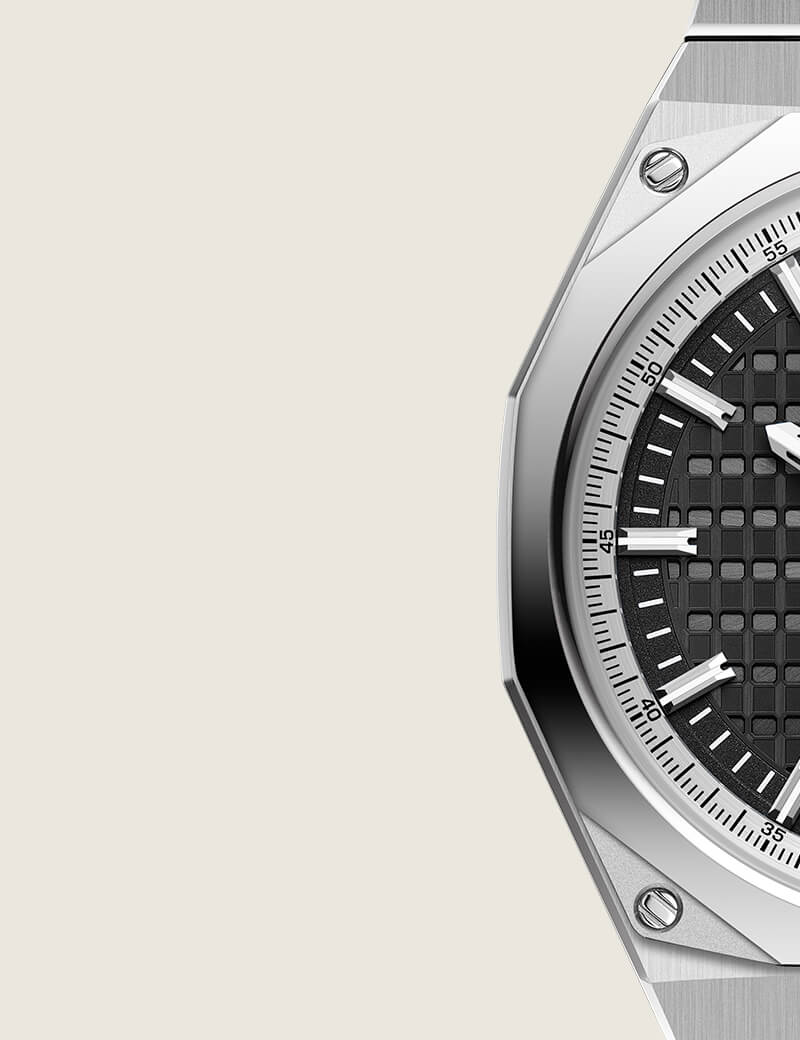
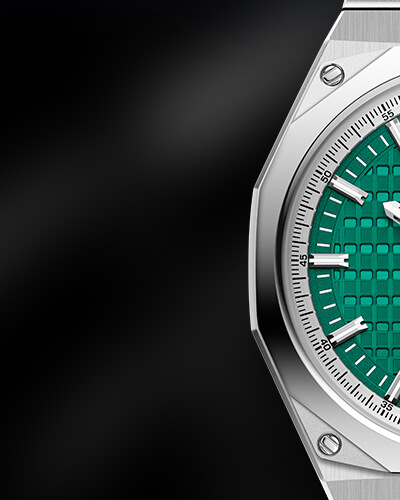
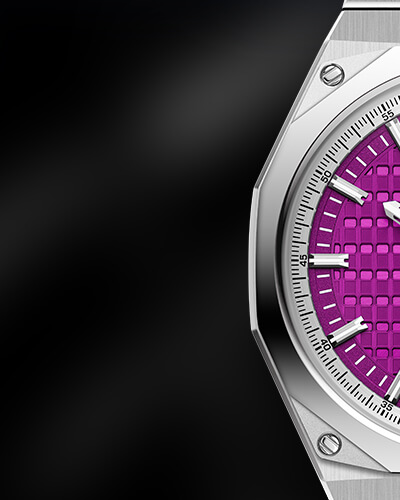
In 2026, Van Bergen 1795 unveils its inaugural wristwatch, where precision that once shaped carillon bells finds new expression in watchmaking. What began in the foundries of 1795 now finds its ultimate expression in precision workshops, connecting wearers to over two centuries of Dutch craftsmanship.
This is more than a watch – it is the continuation of a dynasty, the preservation of a craft, and the beginning of your own legacy.