The House of Van Bergen  ·  Est. 1795  ·  Heiligerlee, Netherlands

Van Bergen 1795 is the only haute horlogerie maison in the world built upon a genuine, unbroken 230-year acoustic engineering heritage.

230
Years of
Acoustic Heritage
6
Generations of
Master Founders
1000s
Bells Cast
Across Five Continents
1795
Year of
Foundation
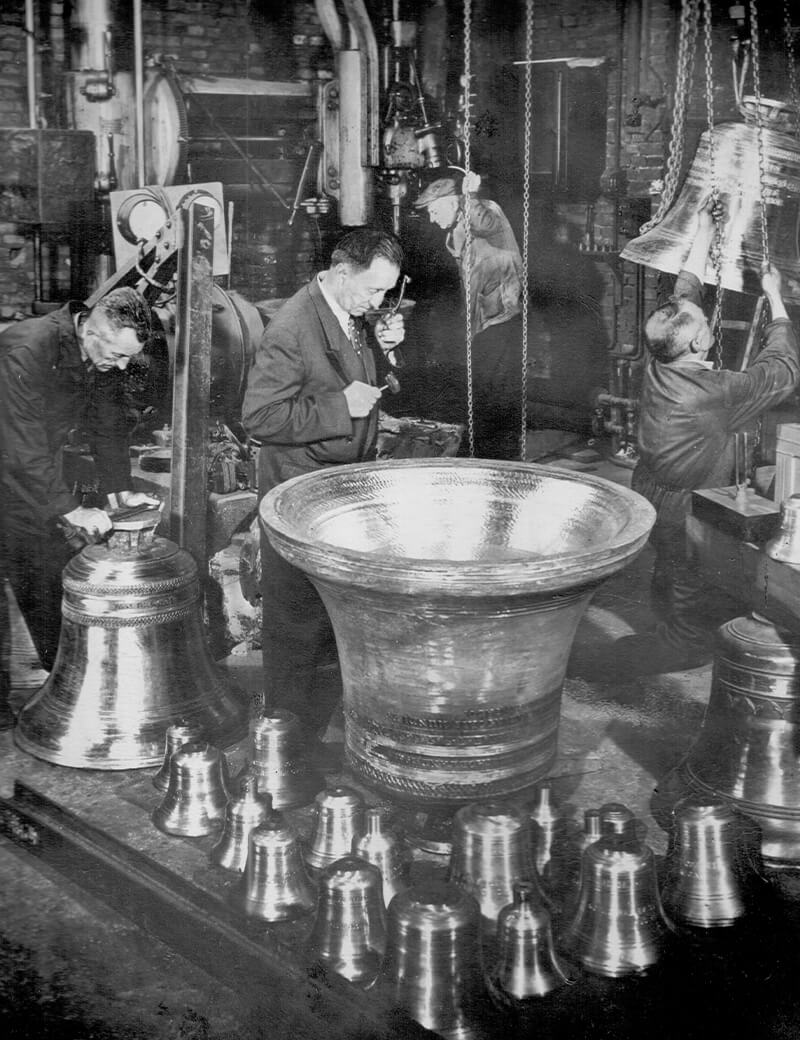
Van Bergen bell foundry, Heiligerlee

Heiligerlee Foundry  ·  Van Bergen family archive

Van Bergen carillon — Van Bergen family archive

The carillon masters  ·  Van Bergen family archive

Est. 1795  ·  Heiligerlee  ·  Netherlands

In 1795, a young man of remarkable formation attempted something audacious. Andries Heeres van Bergen had grown up in Norden, East Frisia, in the shadow of his father's craft — a world of precision, measurement, and the building of things that must hold. At the age of sixteen, he had already displayed such exactitude that his model of a miniature warship, complete with rigging and cannon, drew the personal attention of the King of Hanover, who acknowledged his exceptional talent. When a church bell cracked, it was this same precision that Andries brought to the foundry — having studied the methods of German masters Claude and Mammeus Fremy. The casting succeeded. A dynasty was born.

Over the next 185 consecutive years, six generations of the Van Bergen family would cast thousands of bells for churches, cathedrals, carillons, and civic towers across the world. Their instruments still mark the hours on every continent. Van Bergen bells sound from the Riverside Church above Manhattan, from carillons in South Africa, Brazil, the Philippines, and across Europe.

The family established their principal foundry in Heiligerlee, where the ancient art of bell casting was elevated to scientific precision. At a time when English founders dominated the carillon world, Van Bergen reclaimed Dutch supremacy through uncompromising acoustic perfection. By 1937, no English bell founder supplied carillons to the Netherlands. Van Bergen had prevailed.

The international recognition followed naturally. World Fair medals in Vienna, London, Philadelphia, Paris, Amsterdam, and Antwerp. A royal commission when Princess Juliana attended the historic Utrecht Fair carillon dedication in 1933. Queen Juliana presenting Van Bergen bells to President Truman in 1952 — bells that ring today at Arlington National Cemetery.

The Rockefeller commission of 1956 defined the dynasty's reputation most lastingly. When Andries Heero IV detected tonal imperfections in the Riverside Church carillon, the world's heaviest, and dared say so to the Rockefeller circle, the result was not censure but commission. Fifty-eight playing bells were recast by Van Bergen to correct what no other founder had been willing to name. The same unflinching precision now governs every movement that leaves our atelier.

1933

Royal Recognition

Princess Juliana attends the first Dutch tuned carillon in 200 years. A royal connection forged in bronze that would endure for generations.

1952

A Gift to America

Queen Juliana presents Van Bergen bells to President Truman. They ring at Arlington National Cemetery to this day.

1956

The Rockefeller Commission

58 bells recast for Riverside Church, New York. A commission earned by daring to name what no other founder would: imperfection.

The Seventh Generation

"Between the three of us lies everything Van Bergen needs: the name, the vision, and the craft."

Together, they did not build Van Bergen 1795. They inherited the right to carry it forward.

Baron Dr. R.A.U. Juchter van Bergen Quast — President, Van Bergen 1795

President  ·  Heritage

President  ·  Heritage

Baron Dr. h.c. R.A.U.
Juchter van Bergen Quast

Seventh-generation direct descendant of the founding Van Bergen dynasty. The living custodian of 230 years of acoustic heritage, the unbroken human link between the Heiligerlee foundry and the haute horlogerie atelier.

His family's name appears on bells that ring from Dutch village squares to American cathedrals. The Rockefeller connection, the Arlington bells, the royal commissions, all of them are not history to the Baron. They are family memory.

In carrying that name into watchmaking, the Baron does not merely lend heritage. He continues it.

"We did not build this brand. We inherited the right to carry it forward."
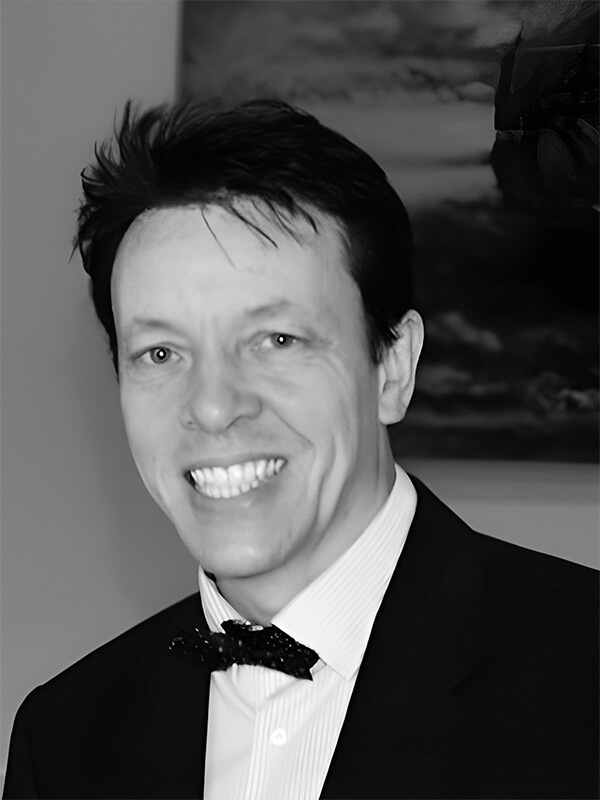
Erik Meijer — CEO, Van Bergen 1795

Chief Executive Officer  ·  Vision

Chief Executive Officer  ·  Vision

Erik
Meijer

Erik is a classically trained percussionist and conductor — educated at the Rotterdam Conservatoire and The Hague Royal Conservatoire — for whom sound is not a feature but a language. That sensibility, rare in any industry and almost unheard of in horology, is precisely what makes him the natural force behind a watch house defined by its acoustic complication.

His career in the luxury watch industry gave him a command of both the creative and commercial dimensions of high horology, a rare combination that few in the industry possess. It is the foundation on which Van Bergen 1795 was built.

Erik designed the Heero Collection, every proportion, every dial variant, every detail. The checkerboard dial, a direct reference to the mathematical grids of the Van Bergen dynasty's founders, emerged from his conviction that every element must carry authentic historical meaning.

"A Van Bergen without sound would be a Van Bergen without soul. Our founders shaped bronze into music; we shape movements into melody."
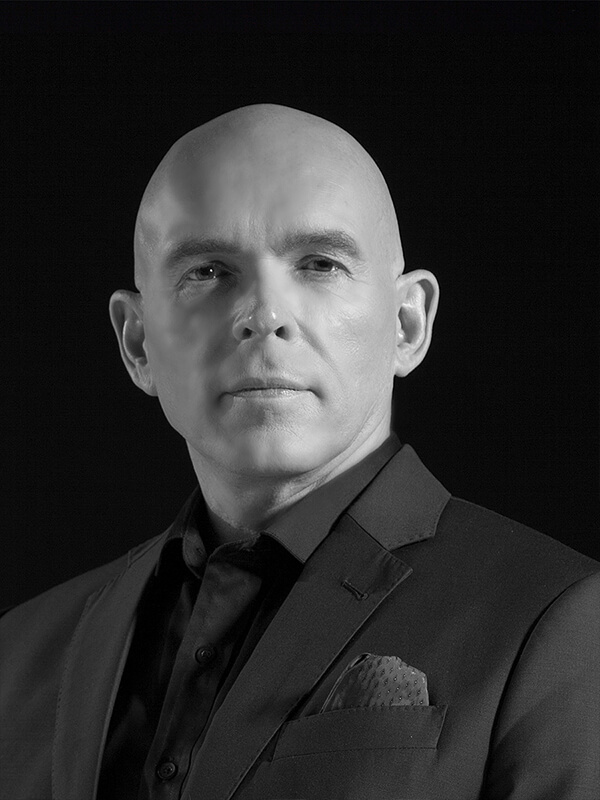
Daniel van Ree — CTO & Master Watchmaker, Van Bergen 1795

Chief Technology Officer  ·  Master Watchmaker

Chief Technology Officer  ·  Master Watchmaker

Daniel
van Ree

Daniel van Ree is among the rarest of watchmakers, a master technician with both the classical training of the Vakschool voor Uurwerktechniek in Amsterdam and the creative vision to engineer the most striking complications in contemporary horology. As CTO of Van Bergen 1795, he is the architect of the world's first wristwatch to house a gong of this scale.

The half-hour sonnerie demanded an entirely new approach: the entire timekeeping calibre conceived within the spatial constraints imposed by the gong, ultimately achieved at 2.5 mm. Every component was conceived, tested, and refined by hand.

The result is a manufacture solution without precedent in modern horology.

"To build a striking mechanism that genuinely moves you, that carries 230 years of bell-founding intent in a single note, that is something else entirely."

The Calibre VBA01 was developed in close cooperation with one of Switzerland's most distinguished independent movement ateliers — a partnership founded on a shared conviction that a calibre is not merely a mechanism, but a statement.

Discover the Calibre